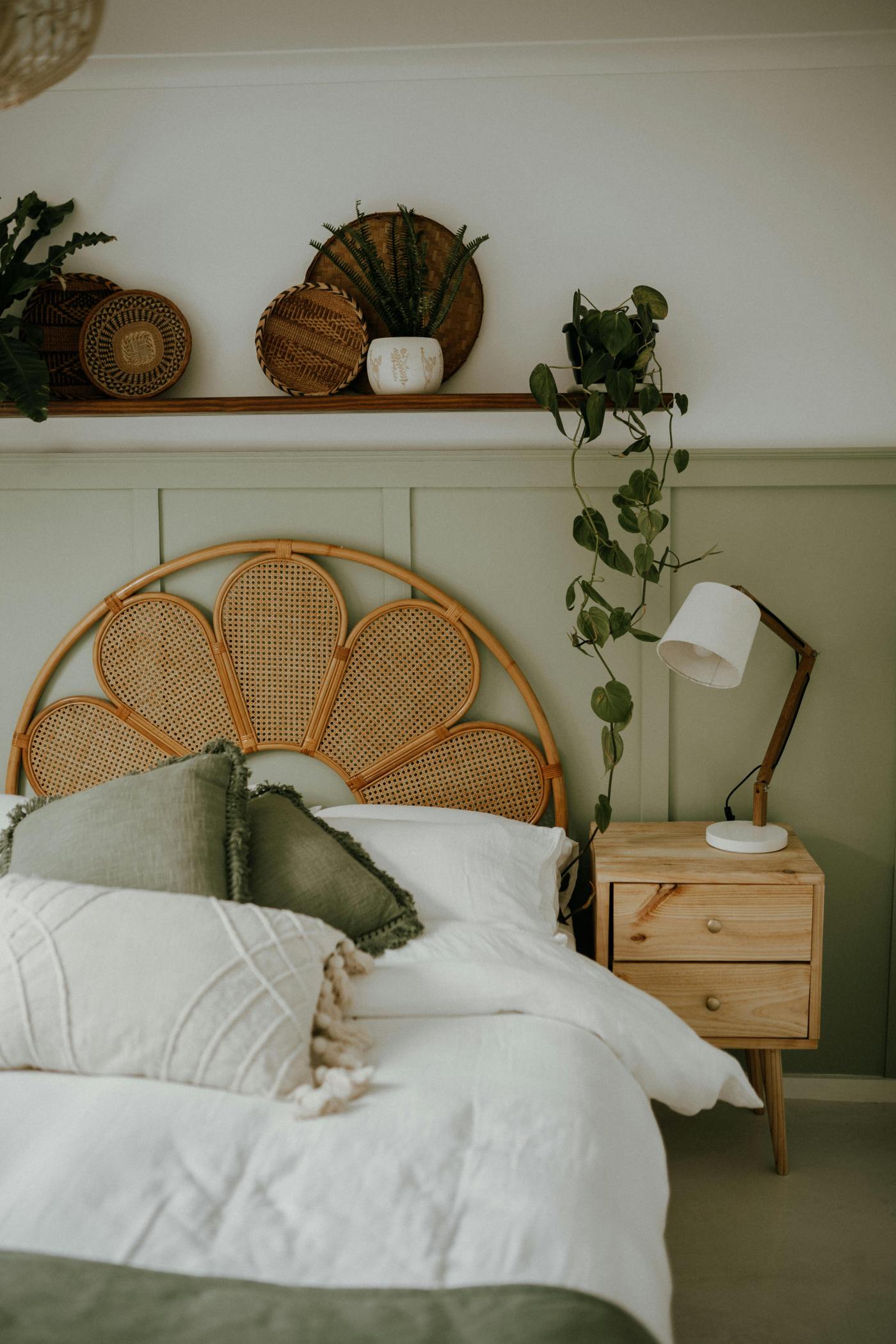
As a gardener, I love spring and all the changes outdoors, but I also like to refresh things indoors by switching between winter bedding (dark quilts and heavy blankets) and something lighter. As I did that this morning, I pulled out one of my most frustrating zero-waste projects, which turned into something I love.
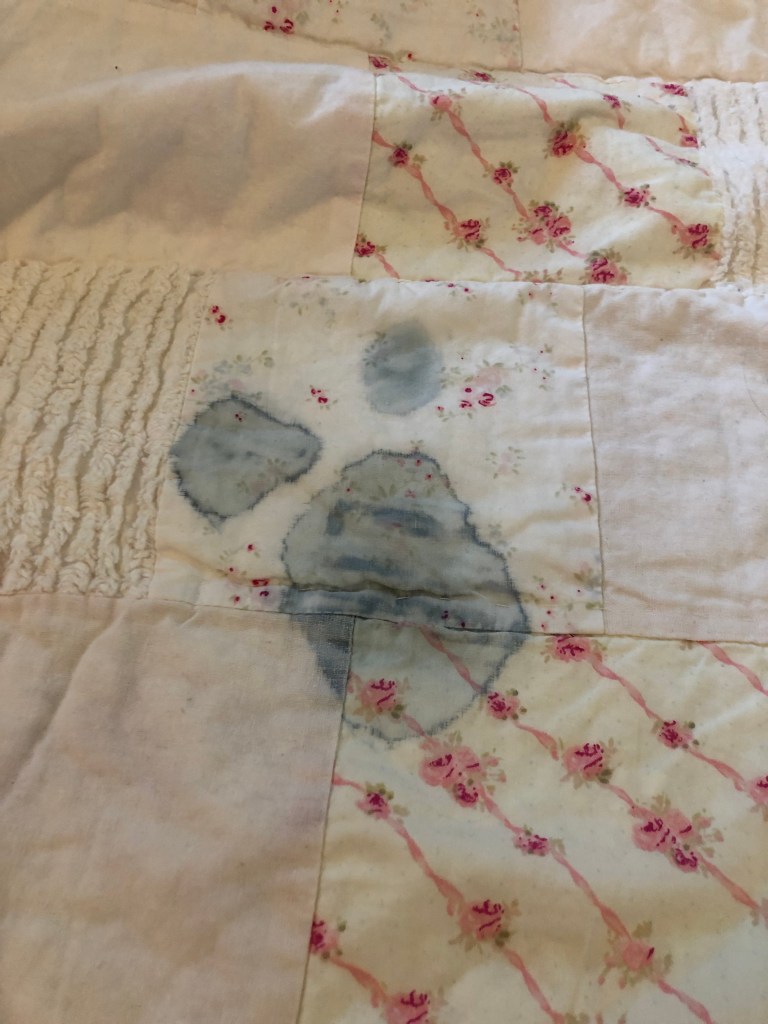
To start, I have to roll the clock back to when my girls (now 17 and 20) were young and shared a room. Their Tante Fé bought them beautiful bedding for their twin-over-full bunk beds. It was all pink and cream and floral, with little hints of sage green. Perfect for two girls sharing a room. Unfortunately, one of those girls left a blue roller ball pen on the bed after doing homework. By the time it was discovered, there were, due to the way cotton fabric draws liquid into itself, two huge blue stains on one of the quilts: one the size of a handprint and the other the size of a silver dollar.
I was probably more upset than the girls.
Because of how much ink had been pulled out of the pen and into the quilt, the stain showed on both sides. But other than that, it was beautiful and in good shape. I tried every stain-removal remedy I read about on the internet. I scrubbed for hours. I bought a special ink remover called Imodex that a friend who worked in the textile industry for many years recommended. The stains were certainly lighter, but they weren’t any smaller.
At some point in my zero-waste reading, I had come across the concept of “visible mending,” or mending an item in such a way that the mending enhances the item in some way, rather than trying to return it to its previous state via invisible mending. I liked the idea, but none of my attempts were good enough to fix a quilt with a problem the size of a handprint.
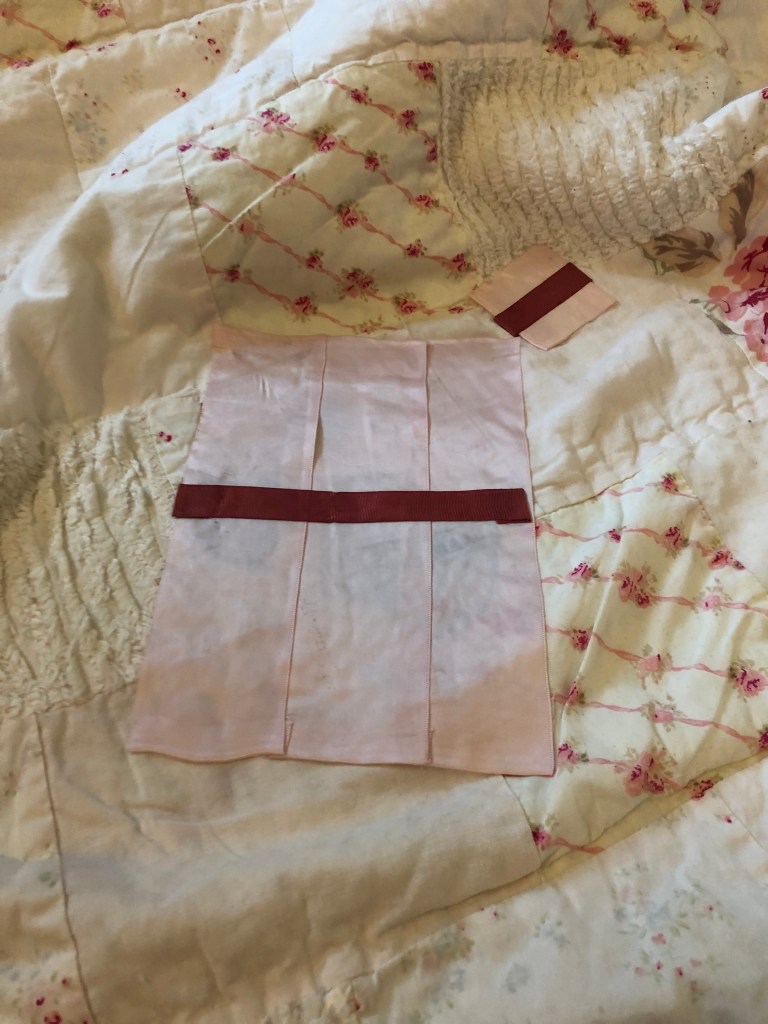
I realized covering the stain was going to be the way to go, and over the course of a year, I must have investigated 10 different options. The problem was, that the colors in the quilt were so light and muted, that any fabric that would blend or accent it was also too light not to show the blue ink through it. As clothing or other items would enter the “upgrade-downgrade cycle,” I held them up against the stains on the quilt but was disappointed every time. I looked at patches and appliques at the fabric store and also came up empty-handed.
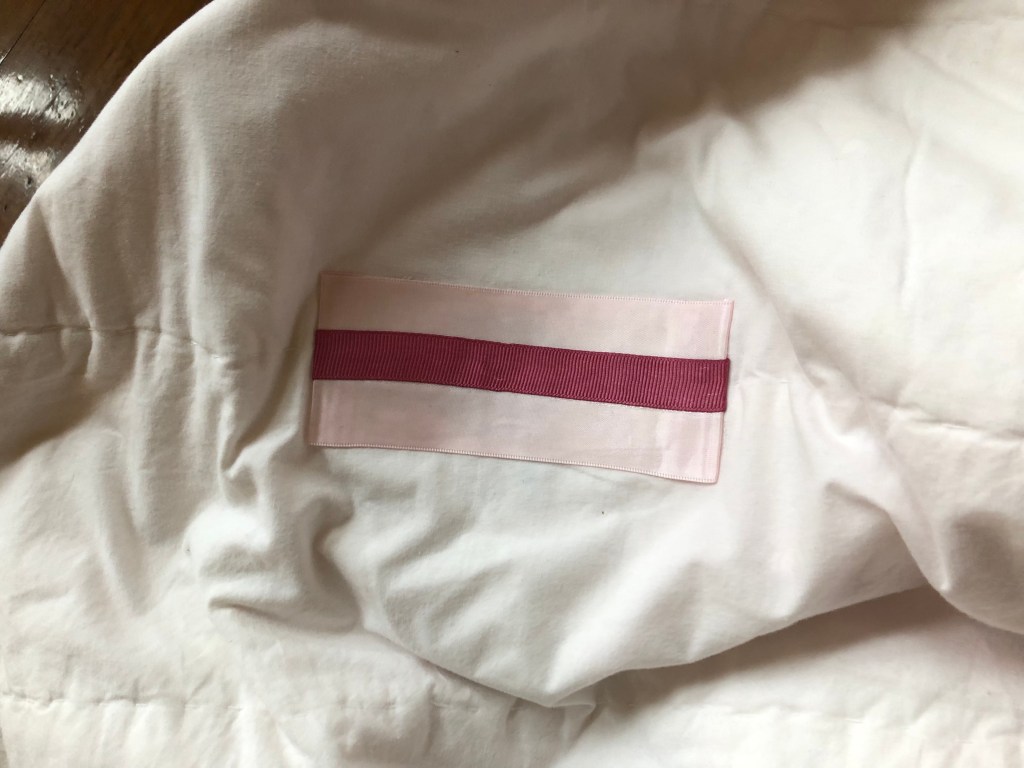
Eventually though, I hit upon a solution that combined ribbon from my ribbon stash (more on that in a future post) with fabric from an old shirt, combined with some iron-on fabric binder. It was fiddly and took a few hours, but the result was lovely. My girls have moved on to their own rooms and bedding they’ve selected themselves, but the quilt makes the perfect summer look for my bed. And I appreciate it all the more because of the steps, and missteps, it took to get there.
The process of mending the quilt, with all its trials and errors, mirrors my own journey in striving to be better and more mindful eved HaShem. Just as Rabbi Tarfon said, “You are not obligated to complete the work, but neither are you free to desist from it” (Pirkei Avot 2:21). This quilt, with its visible mending, is a testament to the ongoing effort to repair and cherish what we have.
~Amy
Chanuka Chanukah Chanukka Chanukkah disinfect donuts doughnuts ecofriendly elul flowers food waste frum garden gardening gratitude Hannukah Hanukka Hanukkah homemaking israel jewish lag b'omer landfill lashon hara low-waste mishloach manos mishloach manot nature orthodox passover pesach plants purim recycle recycling reduce reusable reuse teshuva upcycling washcloth water conservation water waste zero-waste zero waste
 The Bal Tashchit Balabusta
Leave a comment