
Chazal (our Sages) deeply understood human nature—what makes us tick, and what helps us become better versions of ourselves than we were last year. One foundational idea in Jewish thought is the power of our environment: cling to the people and places that inspire you to grow, and flee from those that offer easy rationalizations and permission structures for straying from what you know is right and good.
The Rambam wrote in Hilchot De’ot 6, “It is natural for a person’s character and actions to be influenced by his friends and colleagues, and to follow the customs of his local community. Therefore, a person must associate with the righteous and sit near the wise, so that he may learn from their actions.”
These days, digital accessibility makes it easy to “sit near” those wise in the ways of low-waste living. Social media accounts, Reddit threads, and Facebook communities are brimming with ideas for reducing, reusing, and recycling. Find one that you like and the algorithm will bring more like it to your digital neighborhood.
Virtual connections are wonderful, but real, physical inspiration beats virtual every single time.
This past summer, I had three incredible opportunities to turbo-charge my inspiration in person. It started with a trip to Taos, New Mexico, to visit an old friend I hadn’t seen face-to-face since we said goodbye in a New York airport back in 1987. She makes her home in Taos, living in an Earthship—a fascinating style of passive solar home made of natural and recycled materials (like earth-packed tires and discarded cans) designed to produce its own power, harvest its own water, and process its own waste. Her husband has built Earthships all over the world, constructing homes and schools in places where off-grid self-sufficiency isn’t just an eco-trend, but a necessity. (If you have contacts in Israel willing to pilot an Earthship project, let’s talk.)
A bit more down-to-earth (pun intended) was our trip to her store, Eco Seconds. It’s a treasure trove of creative reuse: coasters and journals crafted from vintage vinyl records, bracelets woven from scrap leather, handbags decorated with aluminum soda tabs, and vibrant wall art hammered out of oil barrel lids and salvaged tools. I snapped a picture of a soda-tab purse and sent it to my best friend’s daughter, who is immensely artistic, with the caption: You could totally make this! I don’t think of myself as an artist, but some things got me thinking I could totally make this (not as beautifully, of course, but everyone has to start somewhere).
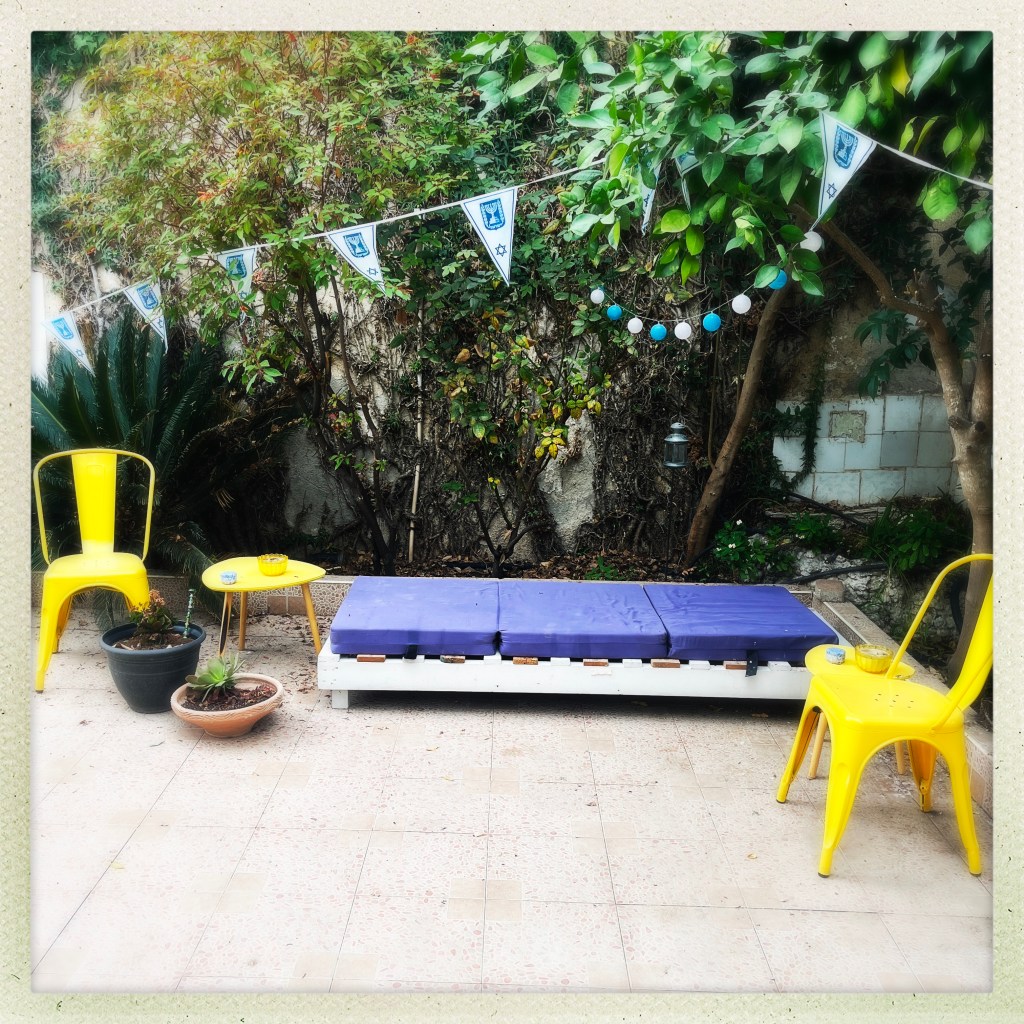
That spark stayed with me when I got home. We live in a duplex with a garden that is long on tile and somewhat short on charm. Beyond the trees and plants, I want my garden to be colorful and interesting—a maximalist boho haven, the kind of garden you love to just sit in and the neighbors stop to admire and/or wonder about the sanity of the person living there. It’s a work in progress. I bought a few core pieces (chairs for sitting at the outdoor table, an “egg” chair that swings when you sit in it and is perfect for reading in on Shabbat afternoon), but almost everything else is salvaged from items that were destined for a landfill:
- The chaise lounge: A discarded bed frame combined with pieces from a wooden shipping pallet became a charming place to sit and talk with a friend or relax with a book.
- The tables: A pair of side tables I rescued from the sidewalk next to a dumpster got a fresh coat of paint and space for candles.
Having taken care of the functional, I turned to the whimsical.
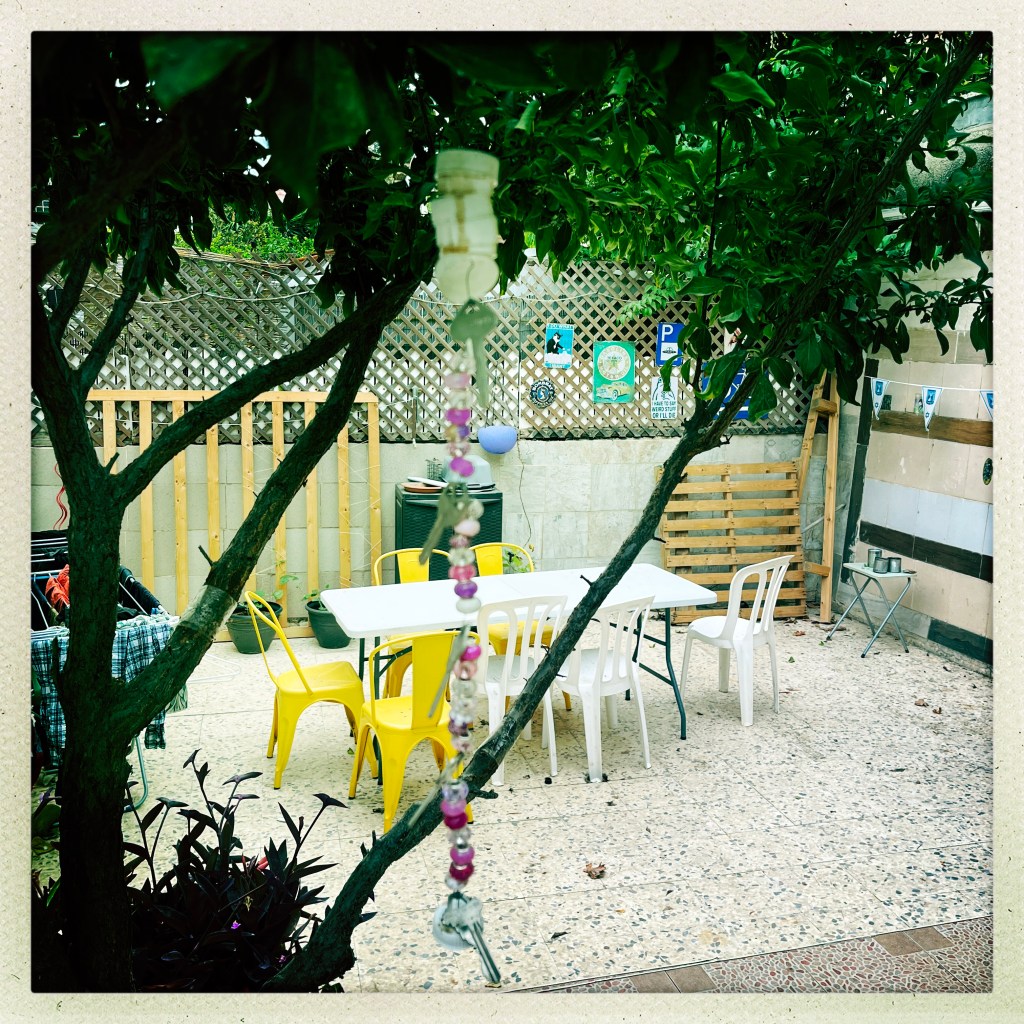
In this, my last summer excursion to the American Visionary Art Museum in Baltimore, Maryland, provided so much food for thought and energy. I started with tiny lanterns made from empty corn cans. (Fill empty cans with water, freeze them solid so the metal holds its shape, then use a hammer and nail to punch intricate patterns for tea lights to shine through. I drew the pattern on scrap paper to guide me, but you could make them freehand or randomly.)
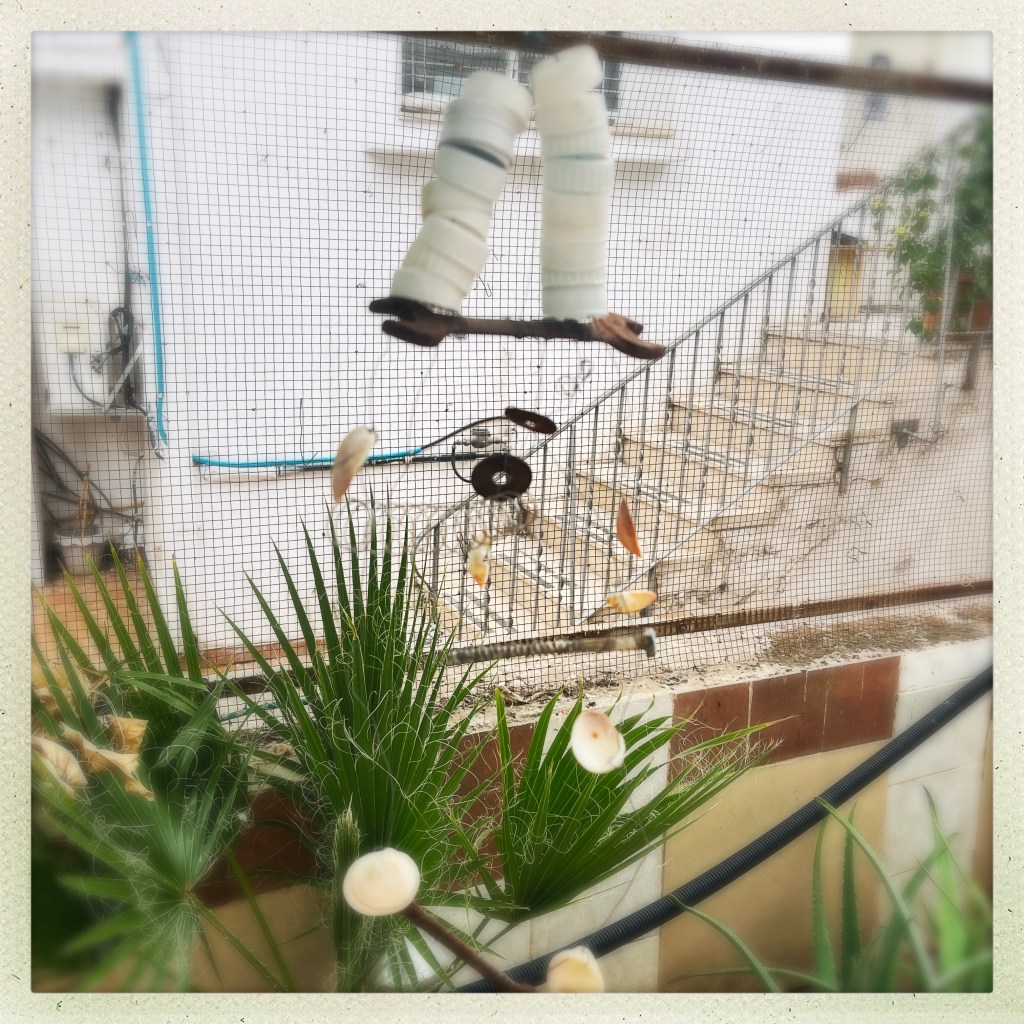
I also made a suncatcher/wind chime referencing Baltimore artist Bob Benson’s “flashies” using colorful beads and keys to our old house that accidentally made the aliyah move with us. Another is made fro scrap metal and seashells from the Kinneret.
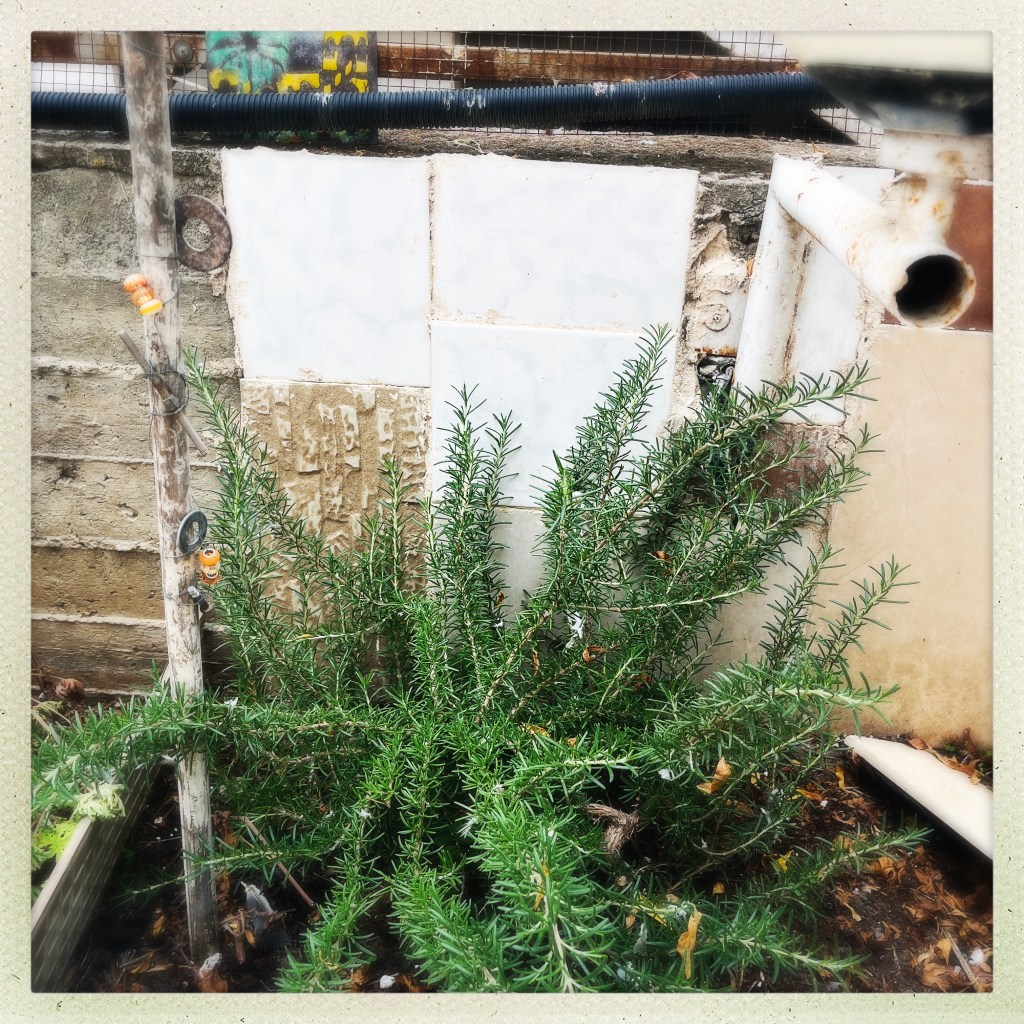
Not everything hangs from trees. A small sculpture I named Magpie currently keeps my rosemary bush company. It was made from a broken shovel handle, beads, and pieces of scrap metal I’ve found around the house and garden.
In progress is Bug-Ra, a kinetic sculpture of a bug that will hang over the stairs up to our house. I only need about 35 more dark green plastic bottle caps (Sprite-colored or darker—contributions welcome!). Up next on the workbench: a Fundsachen (found-object) mosaic project.
The result of this burst of creativity is frequent stops when I am out walking to grab objects I see that I can use. The most productive is our 2 km walk from the grocery store back to our house. On a recent one, I was making more frequent stops than usual. My husband, pushing our granny cart full of groceries would notice I was no longer walking next to him and pause to let me catch up.
After extricating a bottle cap from a flowerbed on the sidewalk, I asked him, “Is this more or less annoying than when you had to stop so I could photograph rust? Is this more or less annoying than when I constantly stop to identify plants?”
Without missing a beat, he replied, “None of them were annoying.”
Dear readers: he is a very smart man.
Rambam speaks about the critical need to surround ourselves with people we can learn from and who will guide us toward the good. Usually, we think of that in terms of rabbinic mentors or vibrant communities. But the most crucial environment we need is the one inside our own front door. Living a low-waste life—especially when your version of it involves dragging pallet wood home to build planters, taking freezer space up with corn can full of water, or scanning the sidewalk for Sprite caps on the walk back from the grocery store—requires a safe space to grow. You don’t need a partner who shares your focus; you just need someone who validates your spark and walks beside you without judgment. When you have a life partner or a close friend who encourages your pursuit of a more thoughtful, waste-conscious world, it makes every step of the journey that much easier.
Until next time,
Amy Eliana
beit shemesh Chanuka Chanukah Chanukka Chanukkah disinfect donuts doughnuts ecofriendly elul flowers food waste frum garden gardening gratitude Hannukah Hanukka Hanukkah homemaking israel jewish lag b'omer landfill lashon hara low-waste mishloach manos mishloach manot nature orthodox passover pesach plants purim recycle recycling reduce reusable reuse teshuva upcycling water conservation water waste zero-waste zero waste


Leave a Reply